
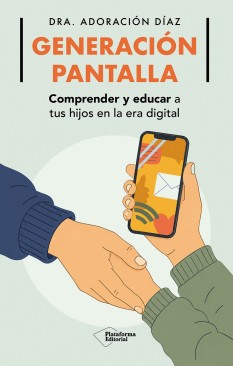
Generación Pantalla : Comprender y educar a tus hijos en la era digital
$ 24.45
It is ten o'clock at night. Your child says they are just going to watch one more video. Forty minutes pass, and when you ask for the phone, they explode.
Scenes like this play out daily in millions of households, almost always leaving the same feeling: that we are raising children for a world for which no one prepared us. Adoración Díaz, a PhD in Education and researcher with the Cyberpsychology Group at the International University of La Rioja, has spent over a decade studying how screens influence the development of children and adolescents. In *Generación pantalla* (Screen Generation), she makes this research accessible to parents with a very specific goal: to help them stop making decisions on the fly.
The book begins with something rarely explained: what actually happens in a child's brain when they look at a screen. It covers why watching a movie on TV is not the same as binge-watching short videos on a phone; what cognitive overstimulation is; how blue light affects sleep; and how immediate gratification shapes one's tolerance for boredom. Armed with these insights, the first part explores the areas where technology infiltrates daily life—eating habits, language, rest, learning, motor development, and emotional well-being—and offers specific guidelines for each developmental stage: 0–3 years, 4–6, 7–11, and 12–16. Each section concludes with two brief answers—what to do and why—backed by recent studies and recommendations from the World Health Organization, the Spanish Association of Pediatrics, and UNICEF.
The second part delves into the issues that most worry families with adolescent children: problematic use of social media, video games, and artificial intelligence; nomophobia and the fear of missing out (FOMO); cyberbullying; sexting; grooming; pornography; viral challenges; and "phubbing." For each issue, the text explains how many young people are affected, how it manifests, what the consequences are, and—above all—how to broach the subject at home without shutting down the conversation.
The final section is the most practical. Adoración Díaz reviews various styles of parental mediation, highlighting which ones work and which prove counterproductive; she suggests agreeing on rules and digital contracts before conflicts arise; she compares leading parental control apps based on cost, age suitability, and utility; and she concludes with a family digital well-being checklist to help each household identify its strengths and weaknesses.
AUTHORS
PUBLISHER
RELEASE DATE
October 14, 2026
ISBN
9791388406140
PAGES
200 p. ; 22,0 x 14,0 cm.
BINDING
Paperback
SERIES
SUBJECTS
LANGUAGE
Spanish